About 6 minutes to read
The final venue walkthrough brings your wedding plans back into the spaces where they will happen. At Danada House, it is a chance to connect the ceremony setting, Atrium layout, vendor timing, guest routes, and weather alternative. A productive meeting leaves fewer questions for the wedding day and gives the team one clear version of the plan.
Bring the latest information rather than every early idea. Your guest count, approved floor plan, vendor contacts, décor list, and timeline are the most useful starting points. If a detail is still unsettled, identify the decision needed and the person who will confirm it after the meeting.
Begin With The Arrival
Walk from the parking area to the gathering place guests will use. Confirm the entrance, arrival time, signs or greeters, and where early arrivals wait. Review the route for people with mobility needs and identify any assistance that has been arranged specifically for your event.
Check that the instructions on your wedding website match these decisions. Our guest guide helps you organize the public information. Guests need a simple, dependable version of the plan, while vendors may need more detailed access instructions that should be shared separately.
Confirm The Ceremony Arrangement
Review the chosen setting with the final or latest count, ceremony orientation, aisle, wedding-party positions, and musician placement. Include any family participation or cultural elements that need space. Confirm when seating begins and who prepares the procession rather than assuming that responsibility belongs to the venue representative.
Then review the indoor version with the same care. The rain-plan guide identifies the decision timing, vendor notification, and room transition. Ask who moves chairs or flowers and where guests spend any reset interval, so the backup is a complete ceremony plan rather than merely another location.
Check The Atrium Floor Plan
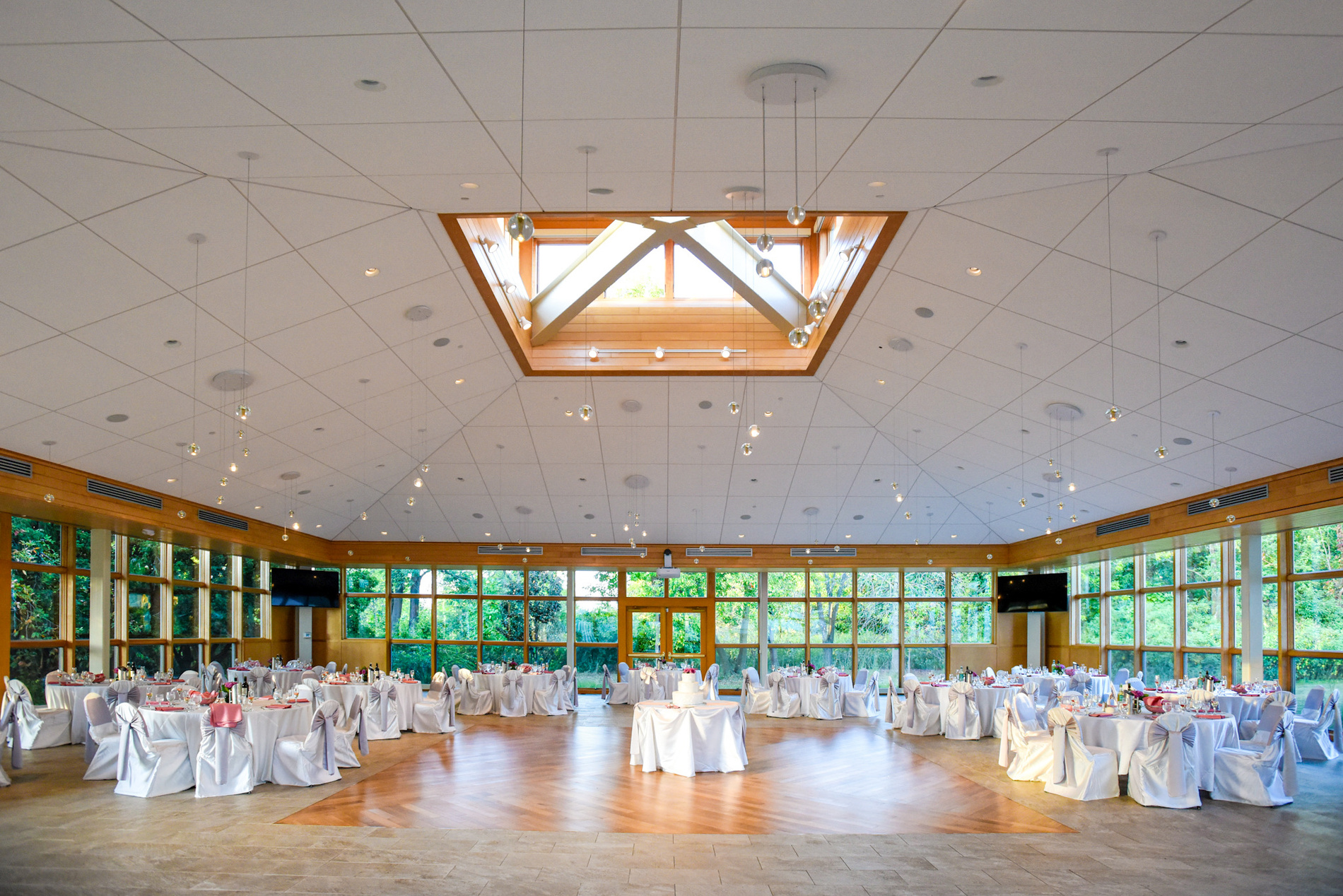
Use the latest drawing to review tables, the dance floor, entertainment, food service, beverage service, and displays. Look at the routes guests and staff will use once chairs are occupied. Ask the venue and caterer to confirm that the complete arrangement is suitable for the event.
Check sightlines for speeches and the first dance. Large flowers, lighting equipment, or lounge pieces should be marked rather than added later from a separate list. Our reception-layout guide helps you spot gathering points and narrow areas that may not be obvious in an empty room.
Connect The Vendors’ Access And Setup
Confirm each vendor’s arrival, delivery method, setup duration, and removal time. The rental period includes practical work around the guest event, so every team needs to understand the access included in your agreement. Ask about any delivery or installation that does not fit comfortably within it.
Review power and placement for entertainment, lighting, and other equipment. Share the venue policies with providers before the meeting so prohibited effects or attachment methods are not discovered at setup. If several teams are bringing furnishings, confirm which provider supplies each item and where it goes.
Review Food, Beverages, And Timing
Bring the caterer’s current service plan, guest count, and dietary information. Confirm the places used for refreshments, dinner, dessert, and any later offering. Ask how the meal timing connects with introductions and speeches so the entertainment team can support service rather than interrupt it repeatedly.
Review the wedding-day timeline from preparations through departure. Allow real time for portraits and for the full guest list to move between spaces. Identify which portions can remain flexible and which need dependable timing because vendors are preparing food or changing the room.
Assign Personal Items And Small Responsibilities
List the items you bring yourselves: a guest book, family photographs, programs, favors, ceremonial objects, or other keepsakes. Confirm placement, permitted display methods, and the person who sets them out. Do not assume a vendor will handle these items unless that work is included in its service.
Agree on who secures cards and gifts, collects personal belongings, and helps with any guest questions. Our roles guide can help clarify tasks that fall between the venue, coordinator, caterer, and relatives. Each person should understand and accept the responsibility before the day begins.
Take concise notes about the decisions made, including any detail that still needs confirmation. If a vendor cannot attend, send the relevant answers promptly and ask it to acknowledge changes affecting its service. The meeting should resolve questions for the entire team, not only for the people standing in the room.
Bring A Decision Log To The Walkthrough
Use a short decision log with four columns: item, agreed arrangement, responsible person, and confirmation still needed. This gives the walkthrough a useful record without turning it into a complicated project. If you discover a question that cannot be answered during the visit, assign the follow-up rather than leaving it as an unclaimed note.
Record the practical consequence of a decision. Moving a display may affect a guest route, vendor setup, or the person bringing the items. Changing the order of an entrance may affect music and photography. Writing down the consequence helps you recognize which other people need the update.
Run A Few Ordinary Scenarios
Ask what should happen if a guest arrives before the ceremony space is ready, a delivery arrives outside its expected window, or an important personal item is missing from the setup. You are not trying to predict every possible complication. You are making sure the team knows who can answer a routine question without interrupting the couple.
Follow one scenario from beginning to end. If a vendor’s arrival time changes, who receives that message? Who confirms whether the new time works? Does another task need to move as a result? Keep the answer aligned with your actual booking and vendor agreements rather than relying on a general assumption about what a venue attendant or coordinator will handle.
Include the guests who have already requested assistance. Confirm the agreed arrangement privately with the appropriate contact, and make sure the person helping on the day knows how to find them. A final walkthrough is a good opportunity to confirm that a thoughtful promise has become a practical plan.
| Item | Confirm Before You Leave |
|---|---|
| Arrival | Guest directions and vendor contact arrangements |
| Setup | Approved drawing and responsibility for personal items |
| Transitions | Who gives each cue and who receives it |
| Ending | Guest departure, belongings, and agreed cleanup timing |
Send One Useful Follow-Up
After the walkthrough, send a concise summary of the decisions that changed or still need confirmation. Attach the approved room drawing and current timeline if they are relevant. Give the recipients a clear way to identify the latest version, and ask the responsible people to confirm the items assigned to them.
Keep this summary focused on action. You do not need to repeat every preference you discussed over the course of planning. The most useful document explains what is happening, who is doing it, and which answer is still outstanding. Put a response date beside genuinely time-sensitive decisions, using deadlines already agreed with your venue and vendors.
Finally, share the on-the-day contact list with the people who will use it. Check the names and phone numbers instead of assuming an old email signature is still correct. That final piece of housekeeping makes the rest of the walkthrough easier to put into practice.
End With Departure And A Written Summary
Confirm the guest event’s finish, transportation arrangements, vendor breakdown, and cleanup. Identify the people who remain for final tasks and what must leave the property that night. If rented containers or equipment require later collection, check that the venue has agreed to that arrangement.
After the meeting, distribute one dated summary with the approved layout, timeline, contacts, and remaining decisions. Retire earlier versions so nobody is working from an outdated plan. The walkthrough has done its job when the important details are clear enough for you to stop managing them and begin looking forward to celebrating at Danada.
Continue Planning
Creating An Outdoor Wedding Rain Plan You Will Actually Love
An indoor ceremony deserves the same care as your first plan. Coordinate the weather decision, guest arrival, flowers, sound, and photographs so the alternative feels considered and welcoming.
Read The Guide
Wedding Planning Checklist and Guide
Give your planning decisions a useful order from booking through the wedding day. Connect venue questions, vendor arrangements, guest information, and the final walkthrough without treating every task as equally urgent.
Read The Guide
Wedding Planner, Day-Of Coordinator And Venue Attendant: Understanding Each Role
A planner, coordinator, and venue attendant can have different responsibilities. Understand the questions to ask, compare actual agreements, and make sure the important handoffs in your celebration have a clear owner.
Read The Guide
How To Choose The Right Caterer For Your Wedding Reception
Choosing a caterer means discussing the guest experience as well as the menu. Review service style, timing, dietary requests, venue requirements, and the information needed for a coordinated reception.
Read The Guide